LOIRE VALLEY - TRAVEL GUIDE
HISTORY - WINE - CASTLES - GARDENS - & MORE
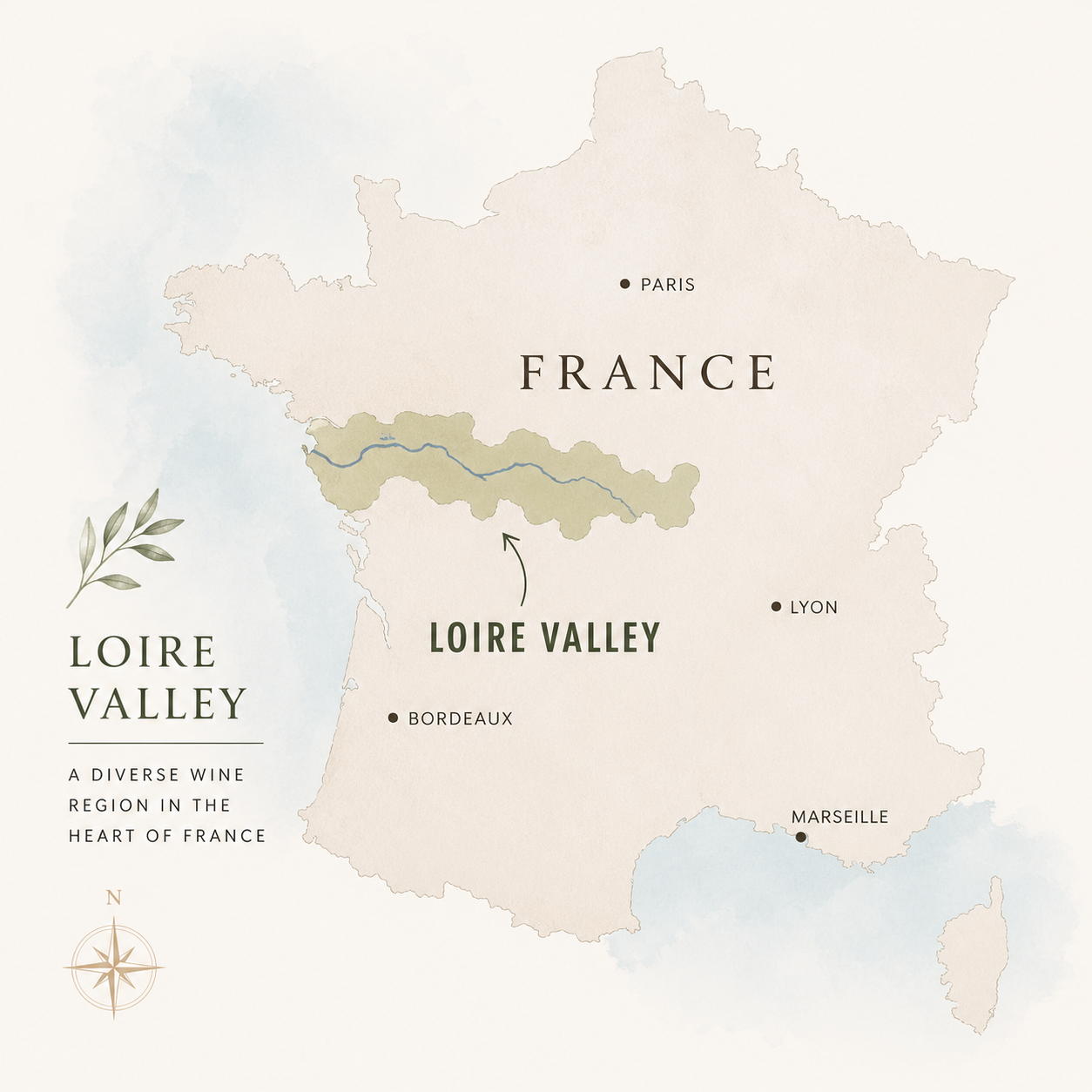
Often called the Garden of France — a landscape of storybook villages, Renaissance châteaux rising from the mist, and vineyards that follow the rhythm of the river itself.
A Region Shaped by History and Beauty
For centuries, French royalty escaped to the Loire to build their summer residences, and their indulgence is still on full display. Castles like Chambord, Chenonceau, and Amboise blend late Gothic and early Renaissance architecture in a way no other region does. Unlike the aristocratic grandeur of Versailles or the medieval strength of Carcassonne, the Loire’s châteaux were meant for pleasure: art, nature, and the art of living well. The region’s villages (like Blois, Saumur, Chinon, Amboise) still reflect this blend of refinement and rural ease.
Understanding the Diversity of the Region
The Loire Valley is one of France’s most diverse wine regions, and arguably, one of the most rewarding to explore.
Across this vast valley, you’ll find an incredible range of styles: crisp whites, elegant reds, refreshing rosés, traditional method sparkling wines, and some of France’s most refined sweet wines. From light and easy-drinking to complex and age-worthy, the Loire offers something for every palate.
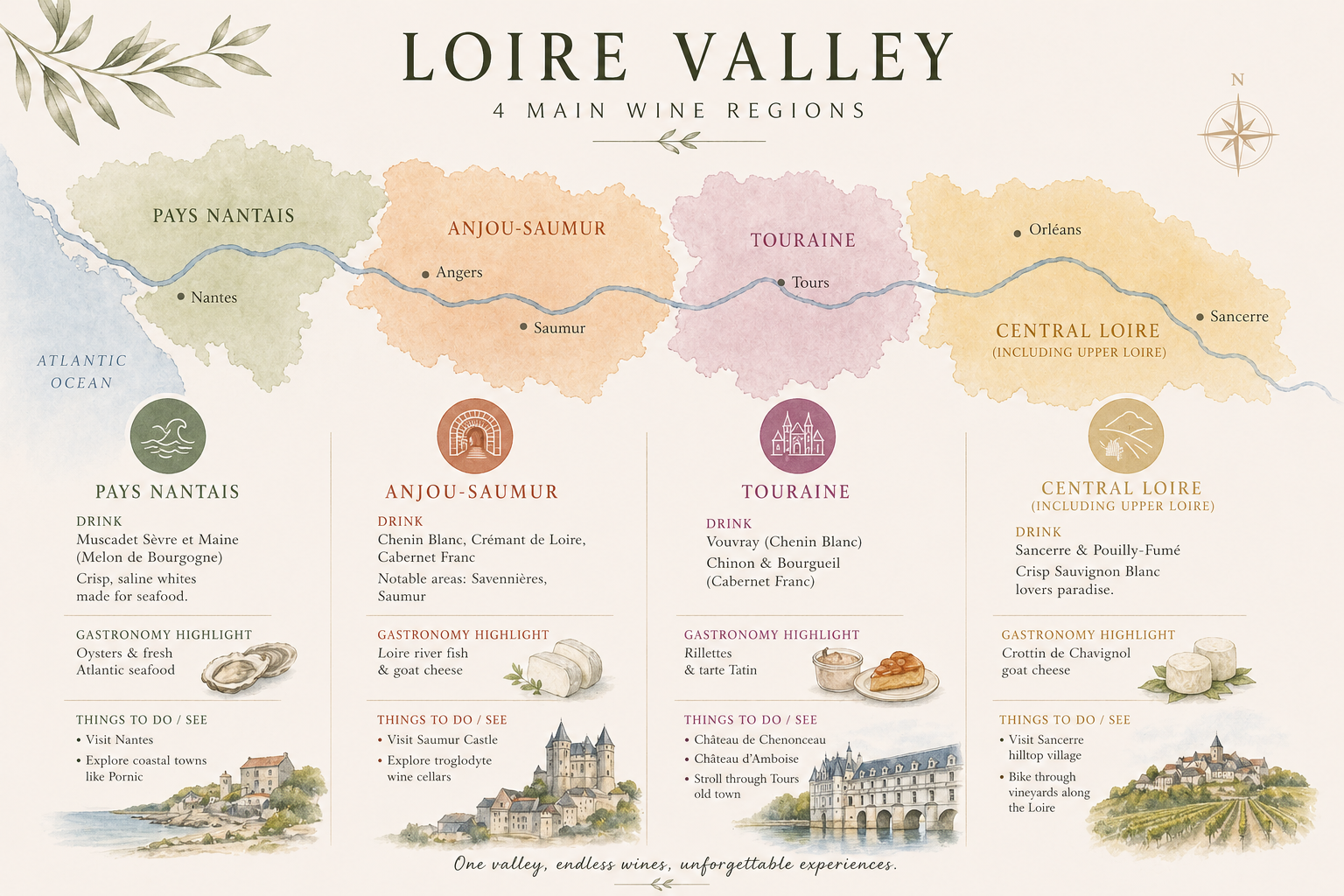
This diversity also makes it an ideal destination for wine travel, whether you’re planning a trip with mixed preferences or simply want to experience a wide spectrum of wines in a single region. For travel and wine purposes, the Loire Valley can be divided into four main subregions: Pays Nantais in the west near the Atlantic coast; Anjou-Saumur around Angers and Saumur; Touraine centered around Tours; and the Central Loire, including Orléans and the Upper Loire vineyards.
Each subregion has its own identity — shaped by climate, soils, grape varieties, and local culture. Understanding these differences is key to planning your itinerary and choosing where to stay based on your wine preferences and travel style, so let’s break them down:
Pays Nantais
Located closest to the Atlantic Ocean, Pays Nantais is defined by its maritime climate and strong connection to the sea. This is the home of Muscadet Sèvre et Maine, made from Melon de Bourgogne. These wines are typically light-bodied, high in acidity, and marked by a subtle saline character, making them a perfect match for local oysters and seafood. The region is less focused on grand estates and more on laid-back, local experiences. It’s an excellent starting point for a Loire itinerary if you enjoy coastal landscapes, fresh cuisine, and understated wine tourism.
Travel highlights:
Exploring the vibrant city of Nantes
Coastal escapes and seafood along the Atlantic coast
Best for: seafood lovers, relaxed travel, off-the-beaten-path experiences
Anjou-Saumur
Moving inland, Anjou-Saumur offers one of the Loire’s most diverse wine portfolios. Chenin Blanc is the star here, producing everything from dry, mineral-driven wines in Savennières to some of the Loire’s most prestigious sweet wines, including the Loire’s only Grand Cru: Quarts de Chaume. The region is also known for sparkling wines from Saumur and Cabernet Franc reds and rosés. What sets this area apart is its combination of wine and history, including troglodyte cellars carved into limestone and a quieter, more authentic atmosphere compared to other parts of the Loire. Plus, these caves are not only used for wine, but also for cultivating mushrooms! Don’t miss the mushroom museums, and if visiting in winter, you might be able to shcedule a trufflehunting experience!
Travel highlights:
Visiting underground wine cellars and caves
Saumur Castle overlooking the Loire
Best for: wine lovers seeking variety, unique cellar experiences, and fewer crowds.
Touraine
Often considered the heart of the Loire Valley, Touraine combines iconic wines with some of France’s most famous châteaux. This region is known for its diversity: Chenin Blanc from Vouvray (ranging from dry to sweet and sparkling), and Cabernet Franc reds from Chinon and Bourgueil that can be perfectly paired with the local Rillettes de Tours and goat cheeses. Touraine is also the most visited part of the Loire Valley, thanks to landmarks like Château de Chenonceau, Château de Chambord, and Château d'Amboise.
Travel highlights:
Châteaux visits and scenic cycling routes
Exploring the historic city of Tours
Best for: first-time visitors, château lovers, classic Loire experience.
Central Loire
Further east, the Central Loire (including the Upper Loire) is best known for its world-class Sauvignon Blanc. Appellations like Sancerre and Pouilly-Fumé produce wines that are crisp, aromatic, and mineral-driven, often considered benchmarks for the grape. Compared to Touraine, this area feels quieter and more focused on vineyards than major tourist landmarks, making it ideal for travelers seeking a slower, wine-centric experience.
Travel highlights:
Visiting the hilltop village of Sancerre
Vineyard walks and tastings with local producers
Best for: Sauvignon Blanc lovers, peaceful wine-focused trips.
Each part of the Loire Valley offers a completely different experience — and that’s what makes it such a compelling destination. Whether you’re drawn by wine, food, history, or landscapes, choosing the right subregion will shape your entire journey.
How to get to the Loire Valley
By train (TGV):
The fastest and most convenient option from Paris. Trains are frequent, comfortable, and ideal if you prefer not to drive, plus, they are an easy way to move from one sub-region to another, but the Loire is also connected to nearby regions, such as Bordeaux.
From Paris to Orléans (approx. 1 hr) to Tours or Saint-Pierre-des-Corps (approx. 1h15), to Angers (approx. 2 hrs), and to Nantes (approx. 2.5 hrs)
From Bordeaux to Saint-Pierre-des-Corps (approx. 2 hours)
By Car:
Driving offers the most flexibility and is highly recommended if you plan to explore multiple subregions. Having a car allows you to easily access vineyards, smaller villages, and wineries that are not reachable by train.
Around 2 hours from Paris to the central Loire (Amboise, Cheverny, Chenonceaux)
Around 3.5 hrs from Bordeaux to Tourraine.
By air:
Several airports provide access depending on your itinerary:
Tours Val de Loire Airport (limited but closest)
Nantes Atlantique Airport (ideal for Pays Nantais)
Paris Charles de Gaulle Airport or Paris Orly Airport (best for international arrivals)
How to Move Around in the Loire Valley
The best way to explore the Loire Valley largely depends on your travel style, but for most wine-focused trips, flexibility is key. Keep in mind this region is part of the French countryside, so even though you’ll find taxis/Uber in the bigger cities, you should not rely on those for inter-city or inter-village transfers, nor for winery pick-ups and visits.
By car:
The easiest and most efficient way to visit wineries, châteaux, and smaller villages. Distances between key towns are relatively short, and driving allows you to explore at your own pace — especially in regions like Anjou-Saumur or the Central Loire.
By train + private driver, or organized tours:
A good alternative if you prefer not to drive. You can base yourself in cities like Tours, Amboise, or Saumur and use regional trains combined with pre-booked drivers for winery visits. For a more curated experience, guided tours offer transportation, winery visits, and expert insights — a great option if you want a deeper understanding without the logistics.
By bike:
The Loire is one of France’s best cycling destinations, thanks to the Loire à Vélo. It’s a scenic and relaxed way to explore vineyards and châteaux — particularly in Touraine.
TIP: For a short stay, base yourself in one region and explore nearby areas. For longer trips, consider combining two subregions to experience the full diversity of the Loire Valley.
What to Do in The Loire Valley
Where To Stay in The Loire Valley
Choosing where to stay in the Loire Valley will shape your entire experience. From historic estates to countryside retreats, the region offers a wide range of accommodations; there’s something for every travel style and for every budget. Here are some of the most characteristic options:
Château & Vineyard Stays
Across the region, many historic properties have been transformed into elegant guesthouses or boutique hotels, often surrounded by vineyards, forests, or formal gardens. Some are located near iconic landmarks such as Château de Chenonceau or Château de Chambord, and some are in more rural areas. Vineyard stays, on the other hand, offer a more intimate connection to the region’s wine culture, with opportunities for tastings, cellar visits, and direct access to the vines, particularly in areas like Anjou-Saumur or Central Loire.
Best for: a classic, wine-focused, and immersive stay.
Gîtes & Troglodyte Stays
For a more local and unique experience, gîtes and troglodyte accommodations offer a different perspective on the Loire Valley. The Gîtes (self-catered countryside homes) are ideal for longer stays or travelers looking for independence, often set in quiet villages or rural landscapes.
And for a more unique stay in a Troglodyte house or apartment is ideal. Carved into the region’s limestone rock (especially around Anjou-Saumur and Saumur), these accommodations are surprisingly comfortable, naturally temperature-regulated, and deeply connected to the region’s history and geology.
Best for: unique stays, slow travel, and off-the-beaten-path experiences.
Boutique & Luxury Hotels
For those seeking comfort with a refined touch, the Loire Valley also offers a wide selection of boutique and luxury hotels. These are often located in charming towns such as Tours, Amboise, or Blois, combining elegant design with easy access to restaurants, markets, and nearby wineries. From stylish boutique properties to high-end countryside retreats, this category offers a balance between convenience and sophistication.
Best for: shorter stays, first-time visitors, and travelers seeking comfort and ease.